Unlucky
First aid for muscle and joint injuries
There's no question: sport is healthy! But with the urge to move comes an increased risk of injury – despite the best preparation and equipment. Bruises and sprains top the statistics, with legs and feet being most frequently affected, followed by arms and hands. Prompt and proper treatment of such injuries is crucial for the healing process.
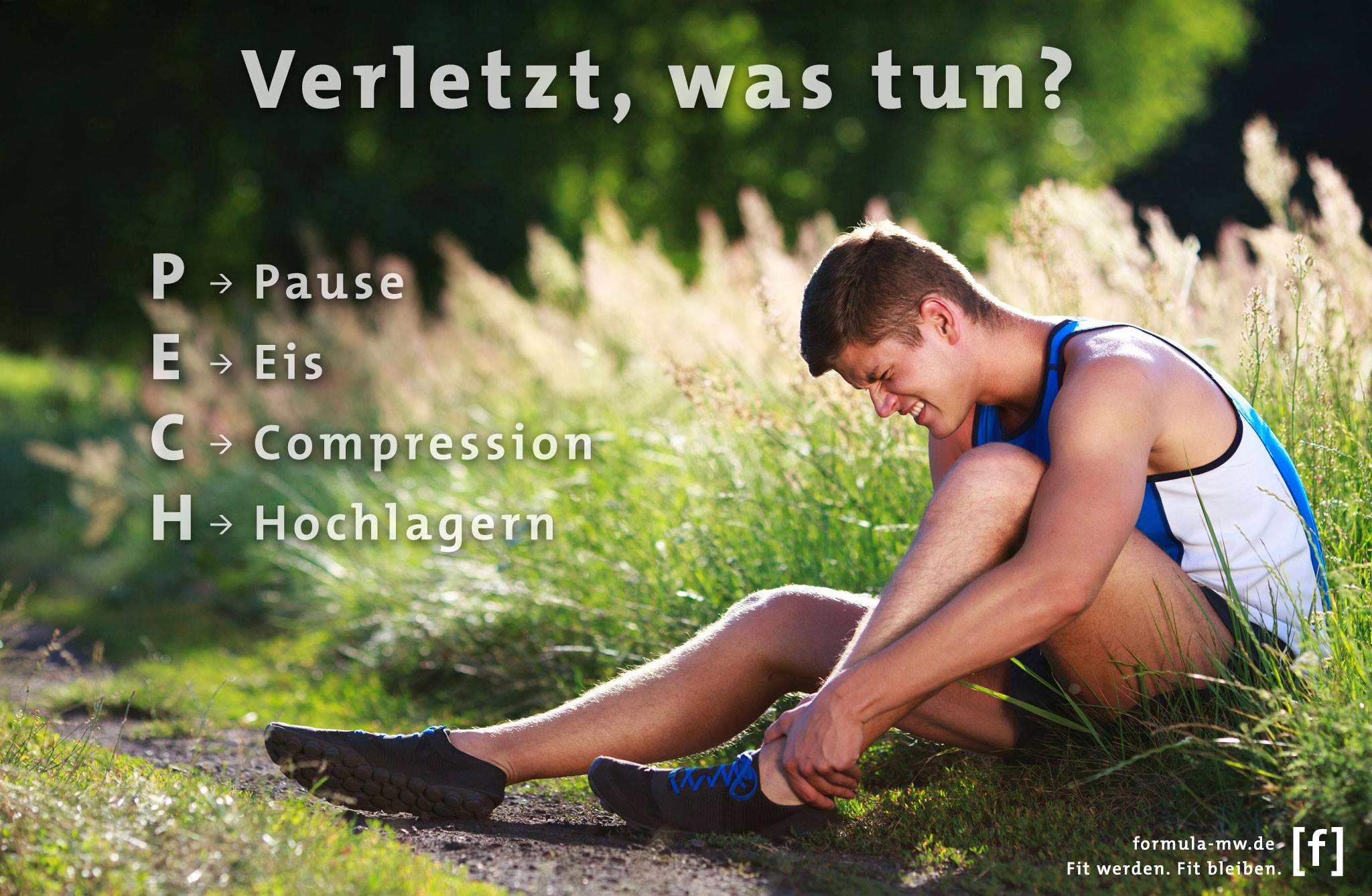
Sports medicine experts recommend initial treatment for muscle and joint injuries according to the RICE principle . This formula aims to prevent further damage to the affected body part and support the natural healing process. The letters R, E, C, and H stand for the four treatment steps following an injury:
Take a break – don't continue through pain
Ice water – immediate cooling of the injury
Compression bandage
Elevate the affected body part.
After initial treatment, minor sprains, bruises and strains can be treated by the athlete themselves, e.g. with ointment dressings containing a decongestant and anti-inflammatory cream such as » profelan ® arnika according to Müller-Wohlfahrt .
If a joint is severely swollen, its function is restricted, or the pain does not subside after two to three days, a doctor should be consulted.
The affected muscles and joints need to be rested for a while. Only after a few days can activity be gradually resumed. Immobilization and elevation are generally not necessary – at most, they are advisable until swelling and acute pain have subsided.
However, it's better to prevent injuries . Sporting activities and training sessions should always include warm-up, stretching, and cool-down phases . And of course, it's beneficial to regularly train the entire musculoskeletal system, not just the muscle groups required for a particular sport.
Generally speaking:
- Always warm up sufficiently before exercising.
- Choose the right footwear for the respective sport.
- Support ligaments that are damaged by frequent injuries with bandages or tapes .
Frequent pain is often caused by incorrect or excessive strain . This applies to all sports: joints and tendons require longer recovery periods between training sessions than muscles .
Reference: Bartek Szewczyk; Müller Wohlfahrt