asparagus
The healthy spring fitness booster
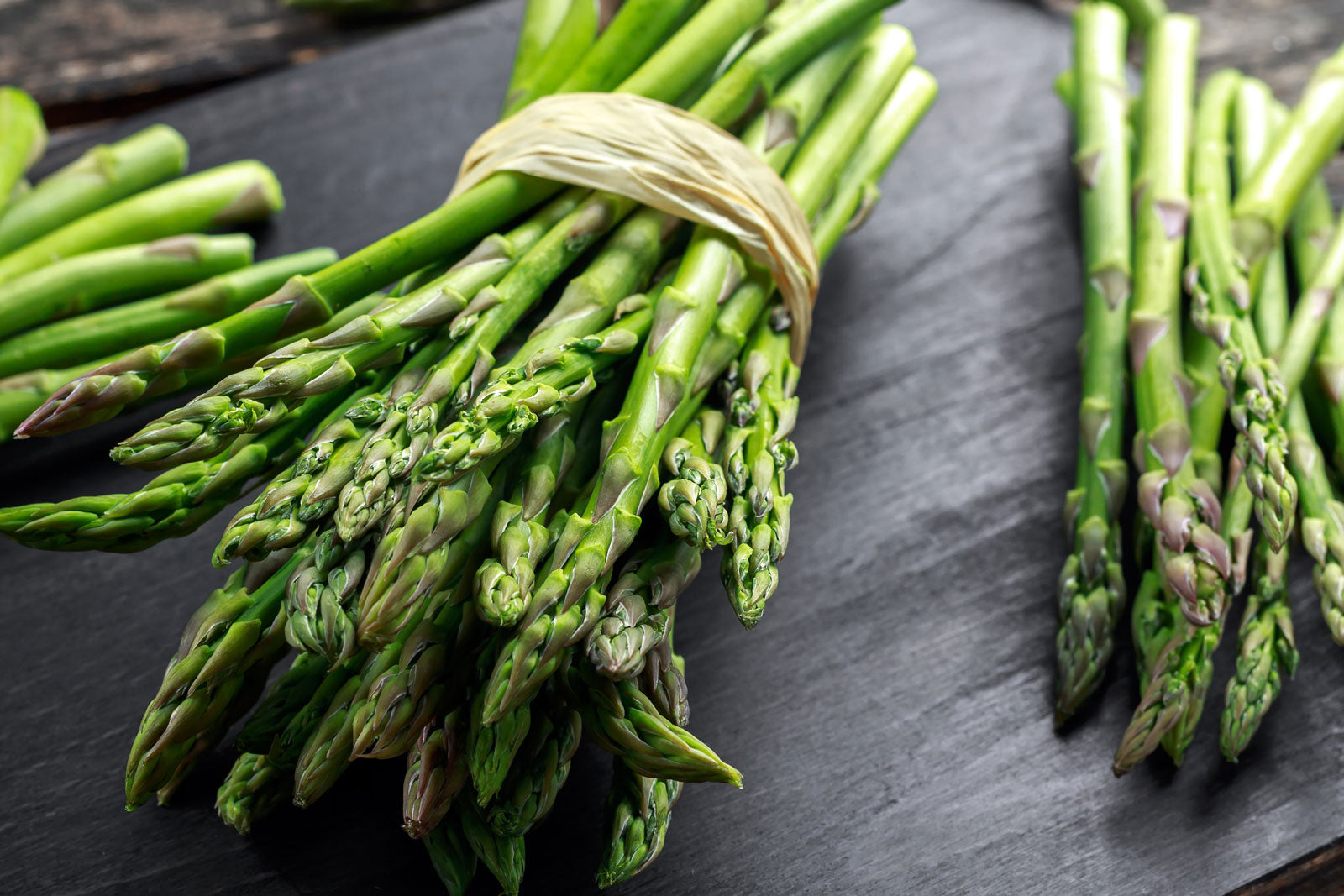
Green, white, or purple – hardly any other vegetable generates such a hype during its season. That's because the asparagus season is short: this popular vegetable can only be harvested from mid-April until St. John's Day on June 24th. Then the highly sought-after asparagus season is already over, as the plants need sufficient time to regenerate between harvests.
Asparagus offers numerous health benefits. With its many nutrients, this vegetable can be an important part of a healthy diet!
But what ingredients actually make asparagus so healthy and invigorating?
Besides fiber , asparagus also contains many phytochemicals – both of which support gut health. But what's truly special about asparagus is its asparagusic acid content. This amino acid not only gives asparagus its characteristic flavor but is also involved in the urea cycle . Combined with its high water content and potassium, asparagus has a diuretic effect and is therefore ideal for a spring cleanse .
Incidentally, asparagusic acid also causes the typical urine odor in some people after eating asparagus.
Asparagus contains many minerals
Asparagus is 93 percent water , 2 percent protein , and 4 percent carbohydrates . It also contains only 180 calories per kilogram . In addition, asparagus is rich in minerals, such as potassium (202 mg per 100 grams), which has a positive effect on blood pressure and promotes good nerve conduction. The calcium in asparagus (20 to 22 milligrams per 100 grams) is an important building block for our teeth and bones. The phosphorus it contains (35 to 60 milligrams per 100 grams) aids in energy production and storage and is involved in regulating the body's acid-base balance.
These vitamins are found in asparagus
Asparagus is also a good source of vitamin A (0.03 milligrams per 100 grams), which supports our eyesight and inhibits free radicals. Vitamin E is an important antioxidant that influences our nervous system and protects against heavy metals that form free radicals. Vitamin K (0.04 milligrams per 100 grams) affects blood clotting and also plays a role in bone metabolism. It is also a fat-soluble vitamin, so you should always eat asparagus with a fatty component.
Green or white? Which asparagus is healthier?
Overall, green asparagus has a slight edge over white asparagus in terms of health benefits, as it contains a bit more of everything. Green asparagus contains more vitamin C and folic acid , as well as more B vitamins than its white counterpart. Another advantage: green asparagus doesn't need to be peeled. But regardless of which type of asparagus you choose, both are extremely healthy.
Asparagus as a superfood for athletes
We've already written about the valuable nutrients in spring vegetables. For athletes, the folic acid content is particularly interesting, as it plays a key role in the formation of new red blood cells and ensures good oxygen supply to the muscles . Asparagus is also simply unbeatable when it comes to heart health and recovery after long runs. So, during asparagus season, athletes can enjoy these delicious spears regularly without any qualms.
TIP: You can double the health benefits of asparagus by jogging to the asparagus stand!
Reference: DronG; A.Meinl