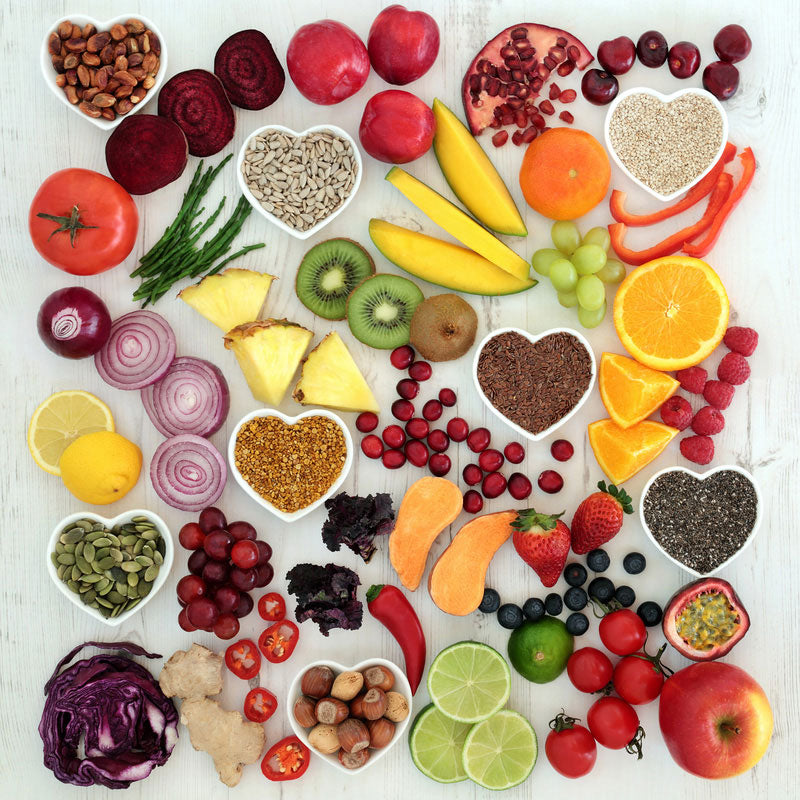
Planetary Health Diet – A Diet for the Future?
How our diet can positively influence health and the Earth
What we humans eat and drink not only affects our health, but also significantly impacts the state of our planet. To account for the projected population increase to 10 million people by 2050, an international team of scientists has developed a dietary plan designed to protect both human health and the planet.
What is the Planetary Health Diet ?
Even though the word "diet" is in its name, the Planetary Health Diet is not a weight-loss diet. Rather, it is a dietary shift for the benefit of both human health and the planet. In 2019, the EAT-Lancet Commission , comprised of 37 scientists from 16 countries, presented its findings for a global food system. This strategy aims to feed the ever-growing world population in a healthy and sustainable way . It also seeks to help curb global problems such as obesity, lifestyle diseases, famine, and climate change. According to the scientists, this dietary approach could prevent approximately 11 million premature deaths per year from chronic, diet-related illnesses.
In addition to the Planetary Health Diet, the EAT-Lancet Commission also recommends sustainable food production within planetary boundaries . Planetary boundaries refer to the Earth's ecological limits. Exceeding these limits jeopardizes the stability of the ecosystem and, consequently, the basis of life for all living beings.
These are the foods included in the Planetary Health Diet plan:
Overall, these values are intended to provide guidance for a diet in which vegetables, legumes, and fruit significantly outweigh meat and animal products . This is meant to promote health and protect the environment.
Carbohydrate sources:
- Vegetables: 300 g (200-600 g)
- Whole grain cereals (rice, wheat, corn or others): 232 g
- Starchy vegetables (potatoes, cassava): 50 g (0-100 g)
- Fruit: 200 g (100-300 g)
Protein sources:
- Legumes: 75 g (0-100 g)
- Red meat (beef, lamb, pork): 14 g (0-28 g)
- Poultry: 29 g (0-58 g)
- Fish: 28 g (0-100 g)
- Eggs: 13 g (0-25 g)
- Dairy products (whole milk or other dairy products made from this amount): 250 g (0-500 g)
- Nuts: 50 g (0-75 g)
Fats:
- Unsaturated fats: such as olive, rapeseed, sunflower, soybean, peanut, grapeseed oil 40 g (20-80 g)
- Saturated fat: 11.8 g (0-11.8 g)
Added sugar:
- Sugar and other sweeteners): 31 g (0-31 g)
These are daily average values , and the meal plan is based on a total energy intake of 2,500 kcal per day. This may be too much for inactive people and too little for those doing heavy physical work. The amounts can be adjusted accordingly. Of course, the Planetary Health Diet can also be adapted to local or individual eating habits.
CONCLUSION
At first glance, the Planetary Health Diet doesn't seem so easy to implement, and the plan appears a bit cumbersome: After all, it's difficult to prepare entire meals with just 13g of egg or 14g of beef per day. Therefore, it's better to view the plan as a weekly plan and then convert the values into suitable meals, for example, to plan a fish and a meat meal.
The German Nutrition Society (DGE) also published a statement in 2022 comparing its own recommendations with the Planetary Health Diet . The DGE identified many similarities between the two dietary recommendations. Both plans are plant-based and prioritize whole grains and unsaturated fatty acids from oils. The intake of animal products, highly processed foods, saturated fats, and sugar should be limited. The recommended amounts of vegetables, fruits, meat, fish, eggs, and oils are also very similar between the Planetary Health Diet and the DGE's guidelines. Furthermore, both recommendations can be individually adapted. Ultimately, the DGE concludes that the main challenge with both dietary approaches is their implementation within the population.
Even if you don't want to radically change your diet all at once, the Planetary Health Diet can provide an impetus to take a closer look at your own eating habits in order to possibly adopt healthier habits ;-).
Reference: BulatSilvia