Arnica montana – a medicinal herb from the mountains
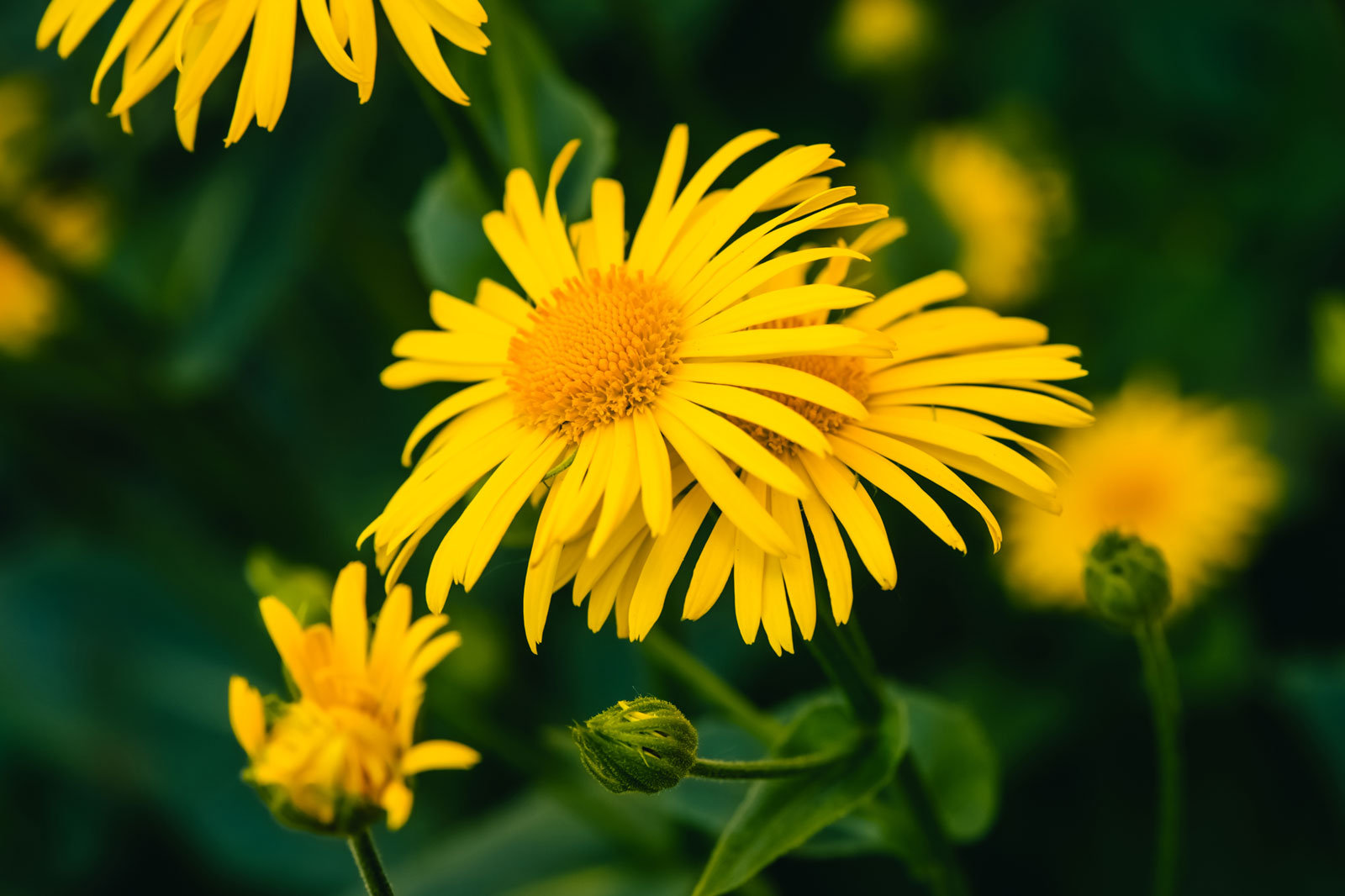
First aid from nature for injuries
Arnica montana, also known as "mountain arnica," is the best-known medicinal plant of the Alps and one of the most recognized medicinal plants worldwide. From June to August, its yellow blossoms brighten up low-lime mountain meadows at altitudes between 600 and 2,800 meters. Arnica ointments or creams, such as profelan® arnica according to Müller-Wohlfahrt, are applied externally and are particularly helpful for bruises, swelling, sprains, and hematomas , but also for muscle soreness, joint pain, pain from overexertion, and minor venous disorders .
Appearance of arnica:
Arnica belongs to the daisy family and is a hardy, perennial herbaceous plant that grows to a height of 20 to 60 cm. Native to mountainous regions, it thrives best in bright sunlight and moist, cool soil. The leaves grow in pairs along the slightly hairy stem; however, the most striking feature is the dark yellow, star-shaped arnica flower. The entire plant contains essential oils that give it an aromatic, slightly bitter, cinnamon-like fragrance.
Mountain arnica is a protected species and therefore must not be picked.
Applications and effects of arnica preparations:
Arnica has an excellent anti-inflammatory effect on all non-bleeding – so-called "blunt" – injuries. It reduces injury-related edema (fluid/lymphan retention) and bruising and relieves pain caused by inflammation and swelling .
The sesquiterpene lactones contained in the plants, especially helenalin, play a crucial role in this process. These plant compounds interfere with the inflammatory mechanism, inhibiting the release of pro-inflammatory substances and thereby alleviating inflammation and pain in the affected tissue. In studies, helenalin proved to be almost as effective as cortisone.
Furthermore, arnica promotes the healing of bruises by accelerating the removal of damaged cell debris and fluid. This allows contusions and hematomas to heal faster.
The essential oils and tannins in arnica plants also have antibacterial properties . Therefore, arnica is often used to treat insect bites .
The parts of the arnica plant used for medicinal purposes are the flowers . For external application on the skin, they are processed into tinctures , ointments, creams , or gels ( e.g., profelan® arnica according to Müller-Wohlfahrt ). Arnica should only be used internally in homeopathic doses, such as globules, as otherwise poisoning may occur.
Caution if you have allergies!
For those allergic to plants in the daisy family (Asteraceae), massaging in arnica ointment can potentially lead to skin irritation and redness, in the worst case with swelling and blistering. Therefore, allergy sufferers should carefully test whether they tolerate arnica.
daniilphotos; [formula] Müller-Wohlfahrt