Bodyweight training
Muscle building and fitness without equipment
Building muscle, toning your body, and improving your fitness without any equipment , wherever you want – is that possible? Yes, it's actually very possible with bodyweight training . It's not a brand new fitness trend, but it's incredibly effective!
What is bodyweight training?
The name says it all. Bodyweight training simply means using your own body weight. And that's exactly how you train: with your own body weight – a strength and endurance workout that requires no weights like dumbbells, cable machines, kettlebells , or other equipment. Basically, everyone is already familiar with a few typical bodyweight exercises, including classics like squats, push-ups, and dips . The result is beautiful, naturally defined muscles. To achieve visible results with bodyweight training , you should train about three times a week, allowing your muscles time to recover between sessions. And how long should you train? The WHO recommends about 150 minutes of moderate exercise per week.
Bodyweight training and its benefits
-
Train wherever and whenever you want:
A major advantage of bodyweight training is that you're not dependent on the opening hours of a gym, but are completely flexible. Additionally, you can train wherever you feel most comfortable. Whether that's in your own home, the woods, or an urban fitness area is completely irrelevant. -
Lower risk of injury:
In contrast to weight training, the risk of injury is comparatively low, as many exercises resemble natural movements performed in everyday life. Therefore, the sequences are not completely new to the body, but rather strengthen it in a targeted way. -
Varied:
The training can be varied. There are numerous exercises that can be combined into an effective workout – whether gentle or challenging. -
Challenging:
Yes, even training using only your own body weight can be challenging. This allows you to vary the pace, number of repetitions, or intensity of the exercises, pushing yourself and going to your limit. -
Fat burning:
Combining intense intervals of cardio and strength exercises provides a great workout to stimulate fat metabolism and simultaneously take advantage of the afterburn effect.
Typical bodyweight exercises
Many bodyweight training exercises are true classics of fitness training and may seem familiar to you. Typical exercises include:
The plank
The plank exercise trains the core muscles , specifically the abdominal, back, and gluteal muscles. The exercise begins in a push-up position, but you support yourself on your forearms. Keep your elbows parallel to your shoulders, then tense your entire body – your body should be straight as a board – and hold for several seconds.
Squats
Squats are excellent for working the leg and gluteal muscles. Hold your hands extended in front of your chest, feet shoulder-width apart. Then, lower into a squat, pushing your hips back. Distribute your weight evenly across your entire foot, ensuring your knees and ankles form a vertical line. As you stand back up, engage your glutes and push your pelvis forward. For a more challenging variation, try pistol squats . Extend one leg forward, keeping your weight on the supporting leg. Then, bend your supporting leg as you would in a regular squat .
Support bends ( dips )
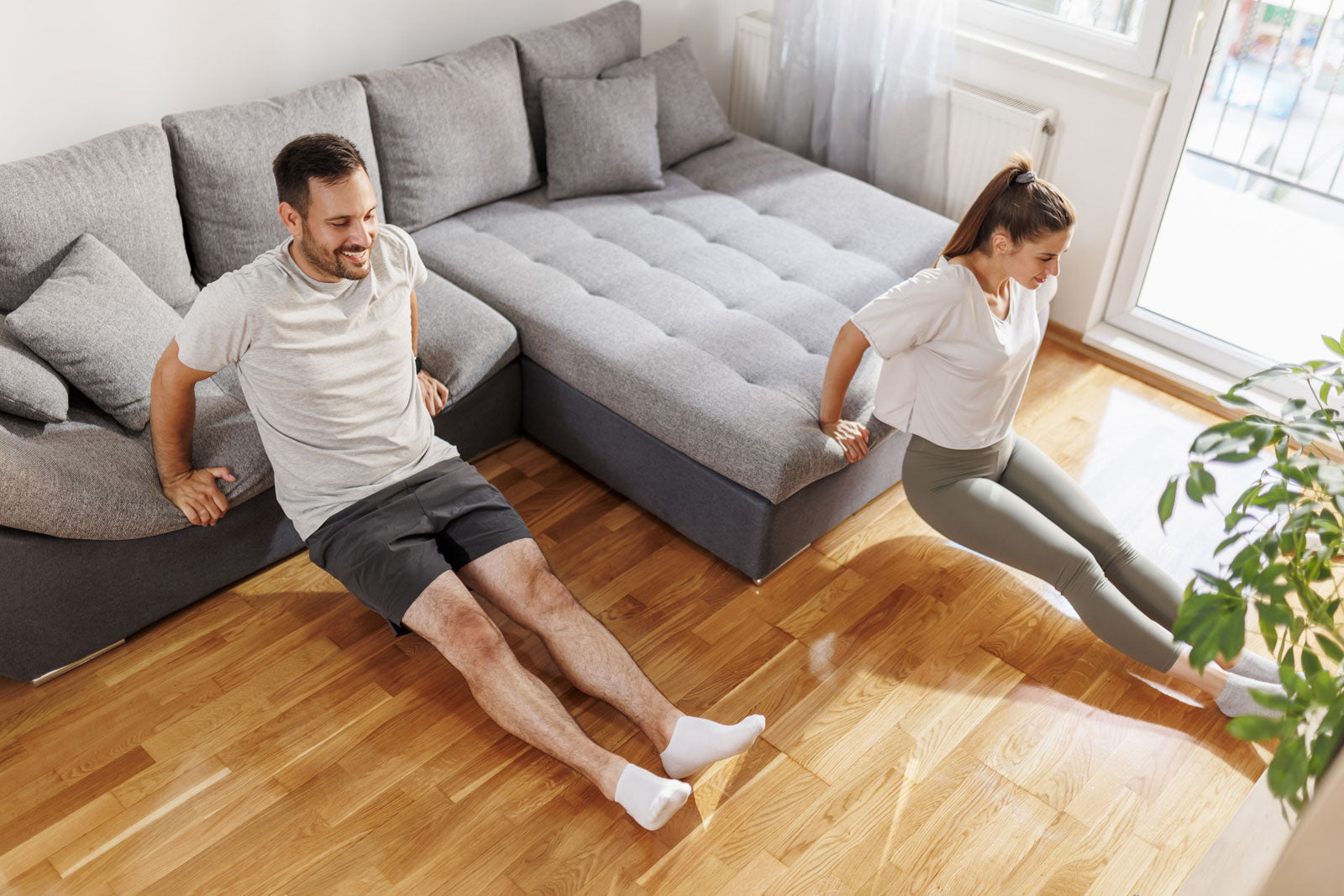
For toned arms, dips are the perfect choice. They also work your shoulder and chest muscles. You don't need much to perform dips , a bodyweight exercise: the edge of a park bench or something similarly high and stable, like a sofa or bed, will do. Place your hands on the edge behind you, as if you were going to sit down. Your buttocks should not touch the bench or bed edge. Extend your legs forward, bend them slightly, and tilt your hips forward – as if you were going to sit. Your toes should point upward, so that only your heels touch the ground. Now lower your body in a controlled manner; the deeper you go, the more intensely your triceps are worked.
How often the exercises are repeated is very individual and depends on the training goal and plan.
CONCLUSION
Bodyweight training is an excellent alternative to traditional weight training. Training with your own body weight is space-saving and flexible in terms of time, as it can be done anywhere and alone. Bodyweight training is the ideal fitness program for anyone who wants to do something for themselves and their body without a gym membership.
Reference: vladans